
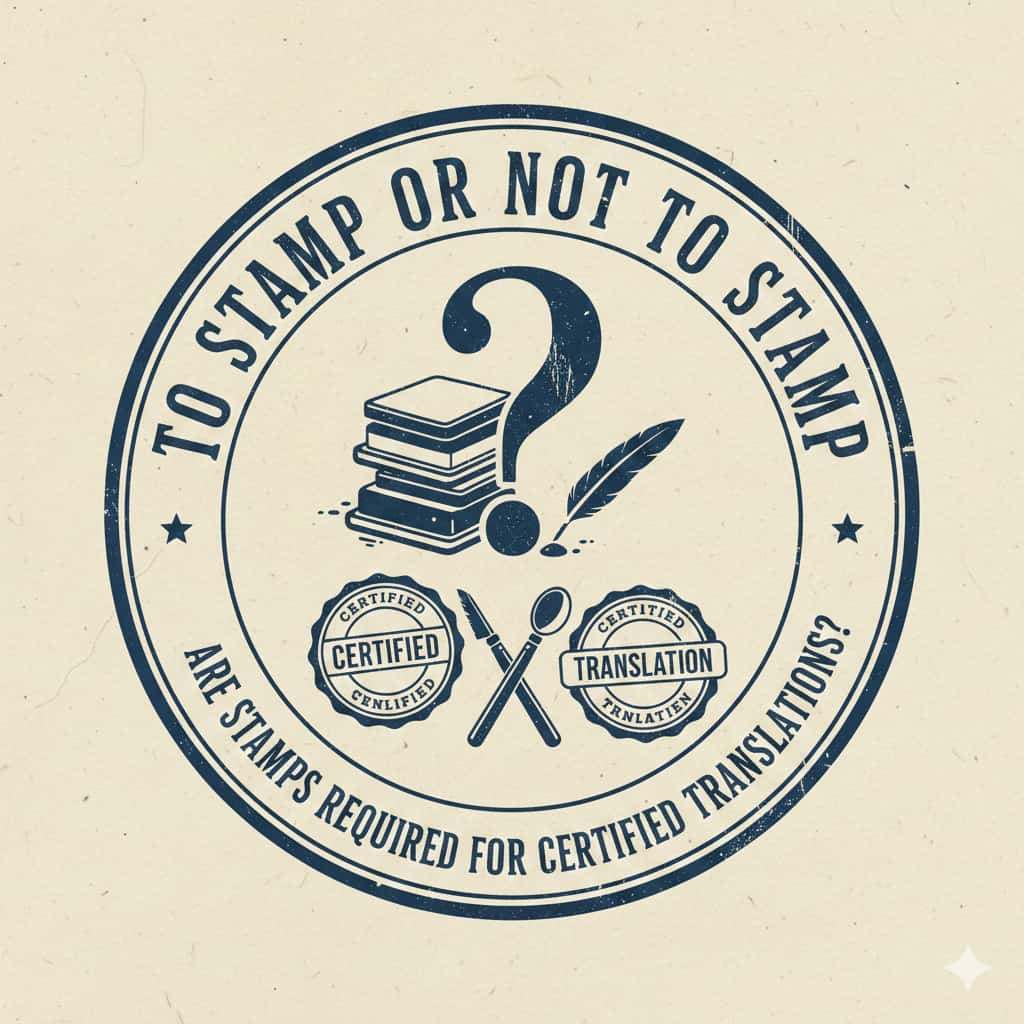
With digital-first processes become standard nowadays, the use of digital stamps in certified translations remains critical for authenticity. While a stamp is not always a strict legal requirement for all institutions, it is a „best practice” that prevents document rejection. It is also appreciated by the clients due to the fact that the stamps provide immediate visual confirmation of the authenticity of the translation.
- The translator or agency should ideally be a member of a recognised body like the Association of Translation Companies (ATC), the Institute of Translation and Interpreting (ITI), or the Chartered Institute of Linguists (CIOL). Best practice dictates that the stamp should appear on both the Certificate of Accuracy (Statement of Truth) and the translated document itself.
- For example, General Medical Council (GMC) specifically requires that documents be stamped and signed by the translation service. They often require a „wet signature” and physical stamp on a hard copy for certain registrations.
- While UKVI guidance focuses on the content of the certification and the details such as name, telephone, address, date, and signature, they explicitly accept and often expect an official seal or stamp from the professional translator.
Here there is a suggested checklist for certified translations:
- Accredited Stamp: From a recognised agency or professional body member.
- Statement of Accuracy: Confirming it is a „true and accurate translation of the original”.
- Full Translator Details: Name, contact address, and credentials.
- Date: The exact date the translation was certified.
- Translation of Original Stamps: The translator must also translate any text contained within stamps or seals on the original document (e.g., a foreign notary’s stamp).
- Always check the requirements with the authority accepting the translations.
To Stamp or Not to Stamp – Are Stamps Required For Certified Translations